

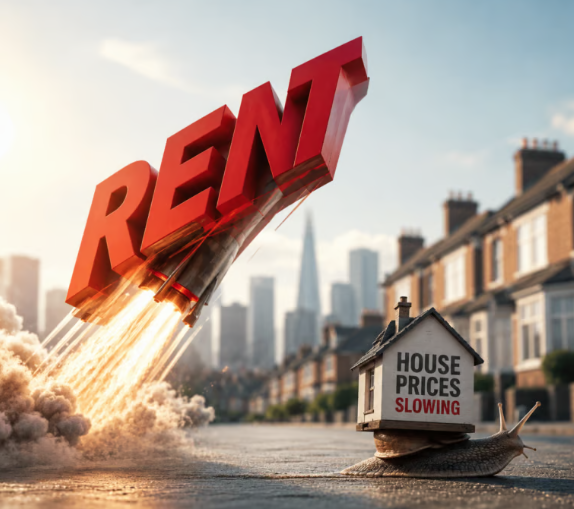
The typical asking rent in the U.S. rose to $1,965 in June, up 2.2% year over year, according to Zillow’s June Rental Report. That is a slight acceleration from May, and the third consecutive month with stronger month-over-month gains than the same month in 2025.
The catch is right underneath the headline. Nearly two in five rental listings on Zillow (39.7%) included a concession in June, up from 35.2% a year ago. A concession is a move-in discount, usually a free month, waived fees, or free parking. It does not show up in the advertised rent, but it absolutely shows up on the tenant’s bank statement, and on yours.
In practical terms, that means a listing advertising $2,400 with one month free actually collects $2,200 over a 12-month lease. Multiply that across a portfolio and the gap between “asking rent” and “effective rent” gets real, fast.
Single-family vs. multifamily: two different markets
Zillow’s data shows a widening split between what small landlords rent out and what the big apartment operators are pushing. Single-family rents rose 3.0% year over year to $2,320, while multifamily rents climbed just 1.5% to $1,789. Single-family rent growth is running at roughly double the multifamily pace.
That gap is not random. The apartment construction wave of 2022-2024 is still working through absorption, which is why so many multifamily operators are still offering a free month to fill vacant units. Single-family rental supply, by contrast, is barely growing. Built-to-rent starts are cooling, resale sellers are holding tight, and the “shadow supply” of accidental landlords has largely burned off.
For small landlords with SFR portfolios, the takeaway is straightforward: your product is scarce, your pricing power is real, and you should feel less pressure to match the concessions your local Class A apartment tower is running.
Where rents are actually growing
Zillow named San Francisco (+8.2% year over year, $3,301), San Jose (+6.2%, $3,729), Virginia Beach (+5.5%, $1,878), Chicago (+5.2%, $2,275), and New York (+4.5%, $3,573) as the top rent-growth metros. On the other end, three high-supply Sun Belt markets posted negative growth: San Antonio (-1.8%), Austin (-1.7%), and Denver (-1.3%).
That geographic split lines up almost exactly with where new apartment supply landed. As Zillow senior economist Orphe Divounguy put it, “Markets that invested in new housing are rewarding renters with more choices, more concessions, and more competitive pricing. Renters in areas that did not are feeling it, as rents continue to increase fast and affordability is slow to improve.”
For anyone underwriting deals right now, that regional data is the actual playbook. Coastal supply-constrained metros are still pushing rent. Sun Belt boomtowns are still working through excess inventory.
Why concessions are still elevated even as supply slows
Apartment completions fell again in Q2, and per Floor Daily’s coverage of the Zillow report, “the rapid climb in the number of available rental units is slowing because the apartment construction wave is receding.” At the same time, home purchase affordability continues to deteriorate, keeping more would-be buyers in the rental pool for longer.
That combination normally tightens a rental market. It is tightening this one, just slowly. Concessions remain elevated because operators are still burning through deliveries from the 2022-2023 vintage. Expect that overhang to fade over the back half of 2026, at which point sticker rents and effective rents should start converging again.
What this means for your portfolio
Three things to think about before your next lease cycle:
- Underwrite to the effective rent, not asking rent. If concessions are running 20-40% of listings in your metro, the “market rent” your comps show is inflated. You can discount your pro forma by the concession value for comparable properties before deciding what to bid.
- Choose your concession carefully. A free month is cash out the door. A new appliance, upgraded flooring, or smart lock is a capital improvement, depreciable over 5-7-15 years, and eligible for 100% bonus depreciation on property placed in service in 2026: same tenant, giveaway, better tax treatment.
- Straight-line the concession in your books. If you gave a tenant a free month, do not book the full sticker rent for eleven months and a zero for one. Divide the annual rent by twelve and use that effective rate every month. Your P&L reads accurately, your cash flow is predictable, and your CPA thanks you at year’s end.
The bottom line
The rental market is not roaring, and it is not collapsing. It is grinding higher on a nominal basis while the effective rent story is more nuanced. Single-family owners have the better hand right now. Multifamily operators in oversupplied metros still have to compete on price. And every landlord should track effective rent, not asking rent, when underwriting a property’s actual value.